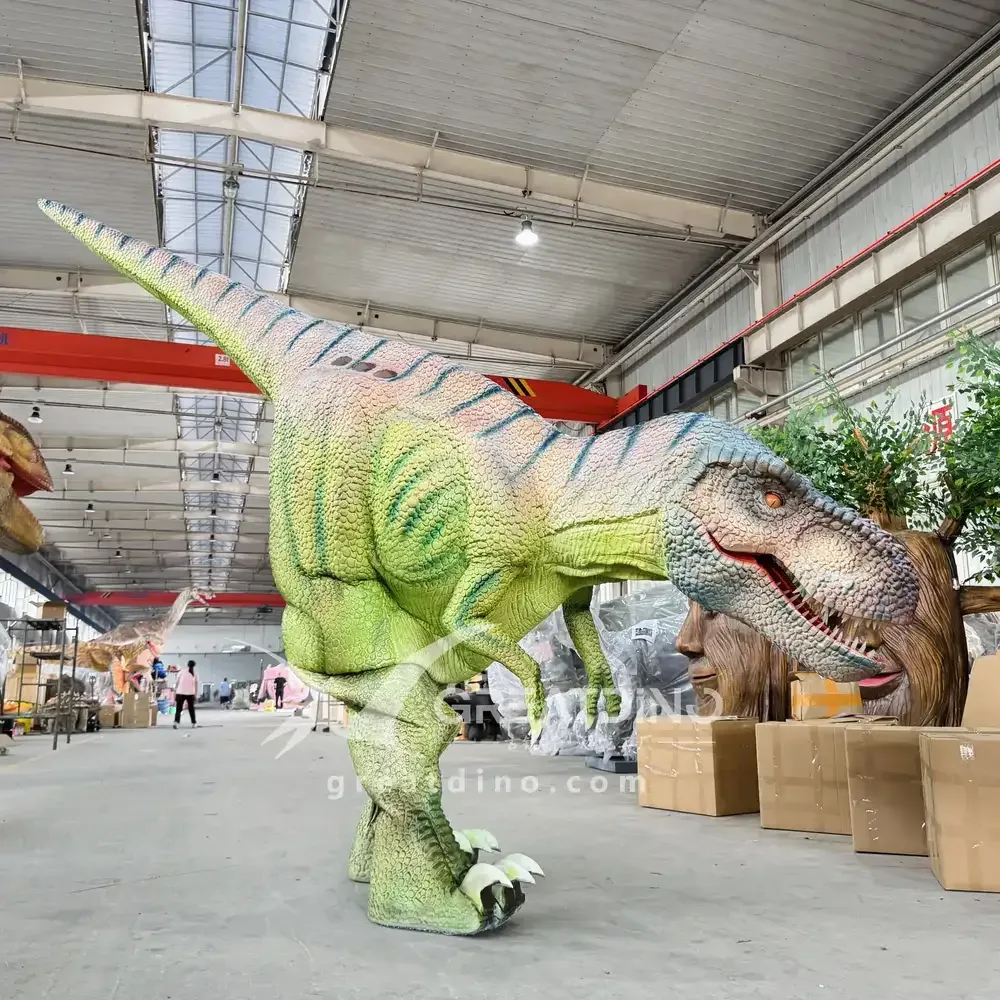
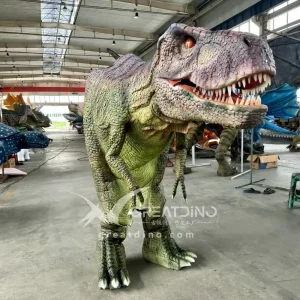
A four-metre T-Rex that walks on its own legs because the performer's legs are hidden inside the torso. Fabric skin, a hinged jaw and a rig that one adult can wear for a full event shift.
Every model is made to order. The figures below describe this build as specified; size, pose, colours and effects are configured around your site before the frame is laid out.
| Product type | Wearable animatronic dinosaur costume, single operator |
|---|---|
| Overall size | Length 4 m, standing height approx. 2.4 m — custom sizing from 3 m to 6.5 m |
| Operator | One adult, height 165–185 cm; hidden-leg design, performer's legs form the dinosaur's legs |
| Weight | Approx. 18–24 kg depending on size and skin option |
| Power | Rechargeable battery pack, 4–6 hours per pack; spare packs supplied |
| Control | In-suit handlebar and jaw lever; optional head-mounted fan and audio |
| Materials | Aluminium and carbon-frame rig · high-density foam body · breathable fabric skin · mesh ventilation panels |
| Movements | Walking (operator-driven) · jaw open and close · head turn · tail counter-sway · arm gesture |
| Visibility | Forward vision through mesh at the chest and neck; handler recommended for crowd work |
| Weather rating | Event use; light rain tolerated, not for heavy rain or standing water |
| Lead time | 20–30 days after size and colour confirmation |
| Warranty | 2 years on frame and mechanisms, with worldwide delivery |
The whole point of this costume is that the audience never sees a human being.
The performer’s legs become the dinosaur’s legs, which means the torso has to sit high enough for a natural stride and the sightline has to come out through the chest and neck rather than the mouth. That geometry is what separates a costume that reads as an animal from one that reads as a mascot with a big head. It also sets the operator height range: too short and the stride shortens, too tall and the head sits low.
The jaw is on a lever at hand height, so the performer can open and close it on cue without breaking stride. Head turn and tail counter-sway are linked to the walk, which is what makes the movement look like one body instead of a person carrying a shell.
Buyers ask about length and colour. What actually decides whether a costume gets used for a season is weight and heat.
A four-metre unit sits around 18–24 kg depending on skin choice, and that is carried for the length of a parade or a meet-and-greet block. We build the rig from aluminium and carbon sections rather than steel, and keep mass low in the head so the performer is not fighting neck strain after twenty minutes. Ventilation is a mesh panel at the chest and neck plus an optional head-mounted fan.
Battery packs run four to six hours and swap from outside the suit in under a minute, so a second performer can take over mid-event. We supply two packs as standard.
Skin choice on a costume is a trade-off between realism and wearability, and fabric is the right answer for most events.
Fabric skin is light, it folds and creases as the performer moves, and it can be repaired on site with a needle and matched thread. Silicone skin reads better in close-up photography but adds weight and needs proper repair if it tears. For a park doing daily walkarounds, fabric outlasts silicone in practice because it can be fixed in ten minutes between shows.
The finish is airbrushed in layers over a printed base, with countershading and stripe work matched to the species. Colour is confirmed against a physical swatch before production, because fabric dye lots vary and a T-Rex that arrives a shade off is a problem you cannot paint your way out of.
A costume is a performance tool, and the first two hours of rehearsal decide whether it works.
We supply a short operating guide covering entry and exit with a handler, the stride pattern that keeps the tail from dragging, jaw timing, and the heat and hydration limits for the performer. Most parks run two performers per costume so the character can stay in the crowd while one rests.
If the costume is for a parade, tell us the route surface and the duration: cobbles and kerbs change the stride and the sole specification. If it is for stage work, tell us the stage height and the lighting direction, because fabric skin under hard backlight shows every seam and we finish it differently.
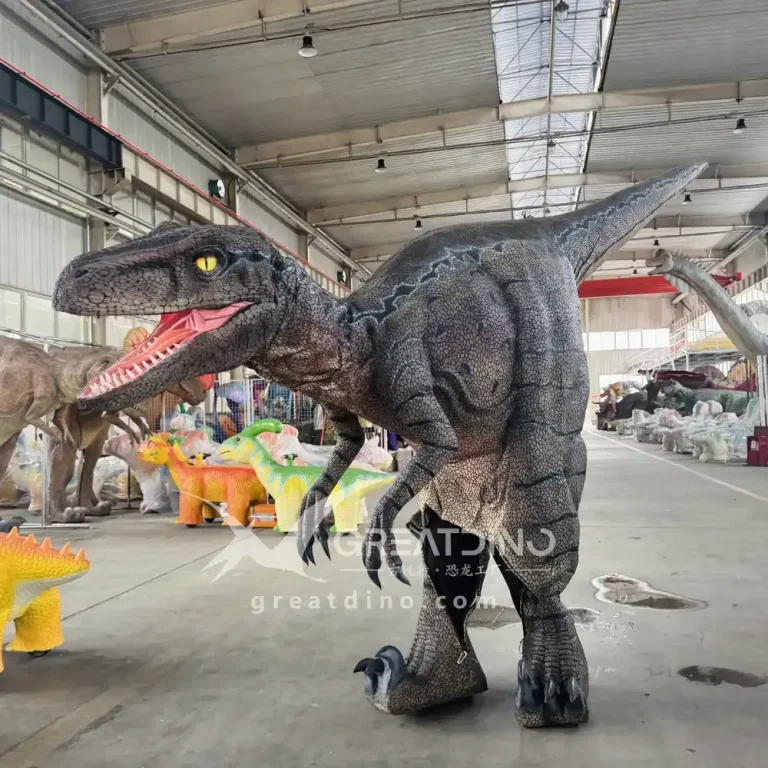 4M Lightweight Velociraptor Costume
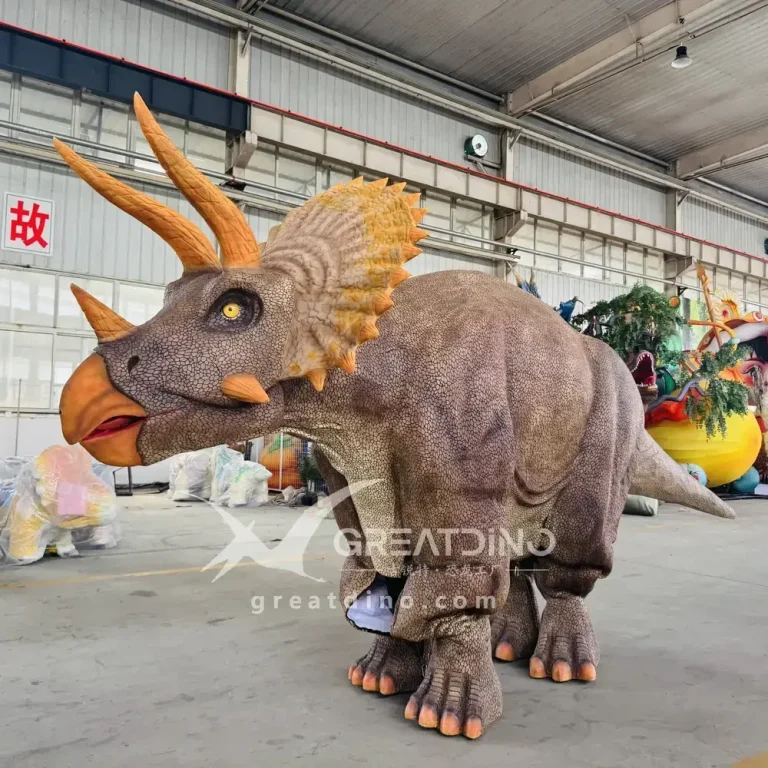 5.5M Triceratops Performer Costume
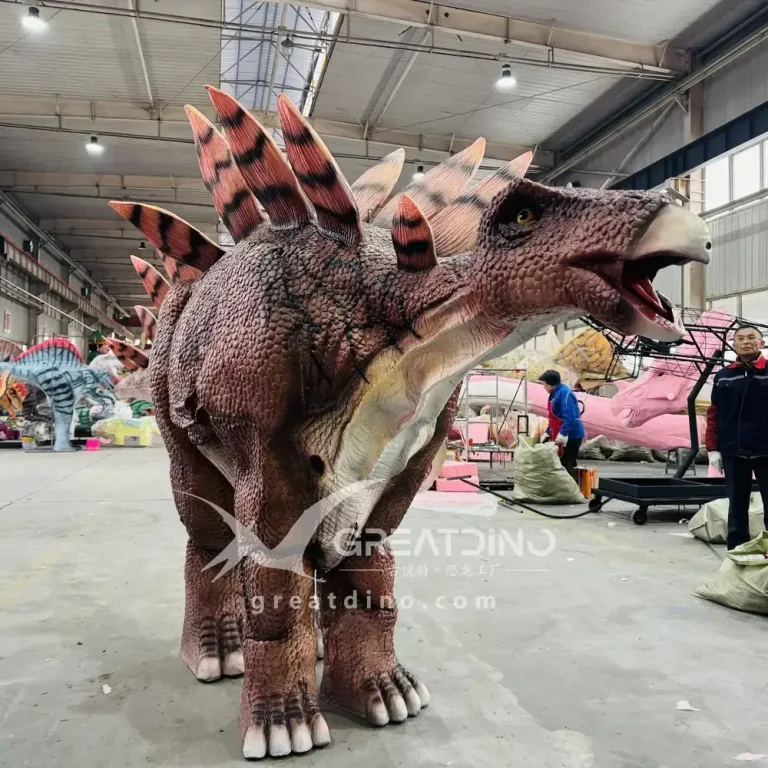 5.5M Wearable Stegosaurus Costume
Related reading: buying guides for museums and theme parks and the full dinosaur costumes range.
The things buyers usually want settled before they ask for a drawing.
Between roughly 165 and 185 cm. The hidden-leg geometry is set to that range; outside it the stride shortens or the head sits low. We ask for the operator height before production and adjust the rig accordingly.
Four to six hours of battery, but the practical limit is heat and fatigue — most parks run 40 to 60 minute sets with a break. Two battery packs and a two-performer rotation are the standard setup.
Forward vision comes through mesh panels at the chest and neck, roughly a 90-degree cone. Peripheral vision is limited, so we recommend a handler walking alongside for crowd work and parades. This is standard practice for large walkaround characters.
Fabric for daily events, parades and touring: lighter, cooler, repairable on site. Silicone for photo-driven marketing and close-up work where surface detail matters more than weight. Both are available on the same rig.
The jaw runs on a hand lever and the head turn is linked to the walk with an override, so the performer can hold a look at a visitor and snap the jaw without changing stride. Audio is optional and triggered from inside the suit.
It ships in a rigid flight case with the head, torso and legs separated, plus a spare battery pack and a repair kit. Setup is one person, about fifteen minutes, no tools beyond the case latches. Worldwide delivery; no site installation team required.
The model ships in sections, with the head and jaw crated separately. Assembly is typically one day on site with a small crane, followed by a full movement test before handover.
Every project ships with a spare-parts list, a maintenance guide and the wiring diagram. Servo units and the jaw drive are individually replaceable on site, so a component can be swapped without returning the animal to the factory. A 2-year warranty and worldwide delivery and installation support are included.