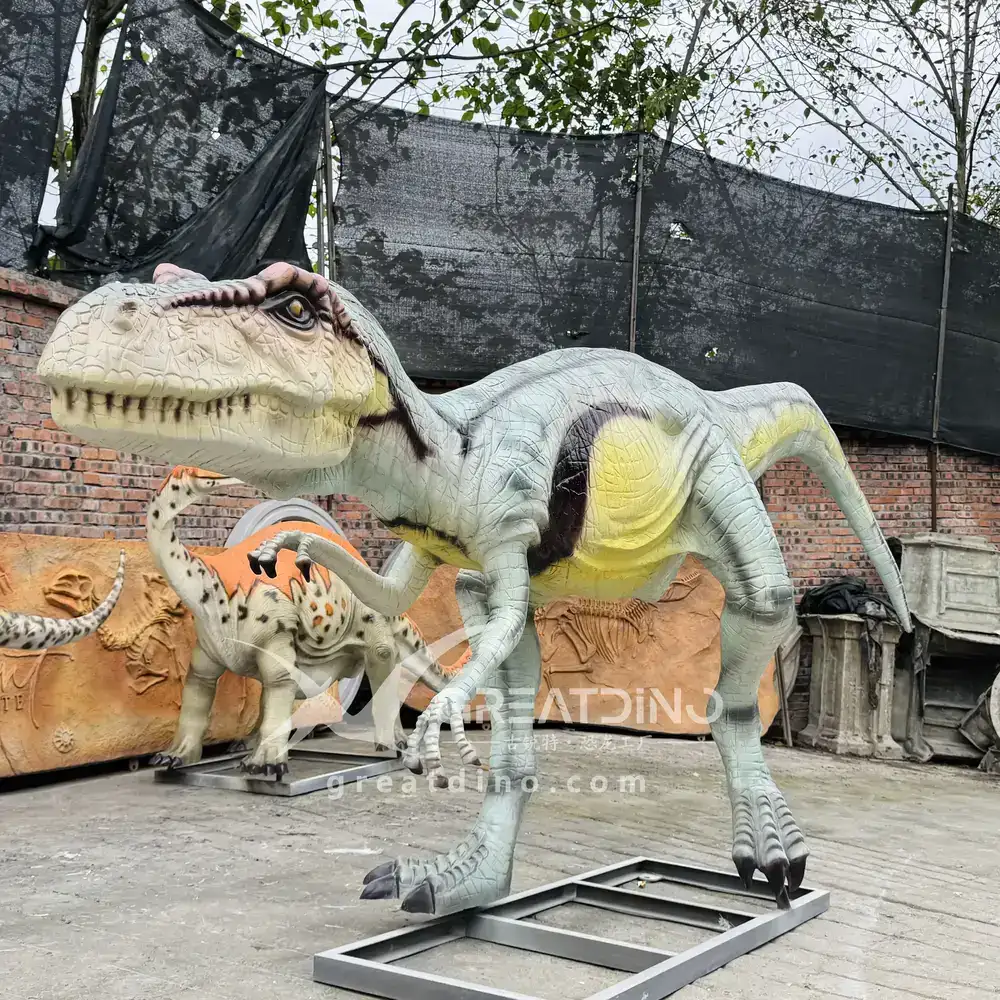
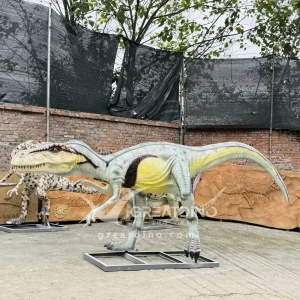
4 m Lycorhinus sculpture built to order — fibreglass shell over a steel armature, painted in layers and anchored to a supplied drawing.
Every model is made to order. The figures below describe this build as specified; size, pose, colours and effects are configured around your site before the frame is laid out.
| Product type | Static fibreglass Lycorhinus, made to order |
|---|---|
| Overall size | 4 m as specified — other lengths built on request |
| Shell | Fibreglass layup over a steel armature, thickness specified to span |
| Finish | Gel coat, filler, primer, layered colour with airbrushed shading, clear topcoat |
| Weather | UV-stable outdoor topcoat; drainage gap at the base joint |
| Anchoring | Base plate with anchor drawing for pad, paving or weighted base |
| Lifting | Frame lifting points marked; balanced for a single crane lift |
| Pose | Fixed pose set at design; landscape integration available |
| Colour | Matched to reference or to a themed palette across a set |
| Packing | Single crate where size allows; sectional for large pieces |
| Installation | Crane lift, four anchors and base touch-up — typically half a day |
| Maintenance | Topcoat re-application every 3–5 years depending on exposure |
| Lead time | 20–35 days after drawing approval, plus freight |
| Warranty | 2 years on shell, armature and finish |
A fibreglass statue has one shot at the pose. There is no movement to distract the eye and no sound to set a mood, so everything has to be carried by silhouette, surface and the way the animal sits in the landscape. That is why static sculpts take longer to design than animated ones, not less.
The detail budget goes where the viewer stands. The brief was a stalking pose, so the body sits low with the shoulder dropped and the head carried forward, and the colour scheme is built to hold that tension at distance. Surface is sculpted in the mould and then worked by hand after demoulding, so the skin reads as animal hide rather than a smooth shell with a pattern painted on.
The shell is laid up in fibreglass over a steel armature, with the thickness specified to the piece’s span: a 2 m statue and a 4 m one do not carry the same layup. The armature is anchored to a base plate cast into the legs, and the whole piece is designed so it can be lifted by the frame rather than by the tail or the neck.
Finish is the difference between a park sculpture and a fairground prop. Gel coat first, then filler and sanding, then a primer, then colour built in layers with airbrushed shading in the recesses and a clear topcoat. Outdoor pieces get a UV-stable topcoat that is re-applied every three to five years depending on sun exposure.
Fibreglass handles weather well and fails in three predictable places: the base joint, the thin edges of crests and horns, and any horizontal surface where water sits. We design the base with a drainage gap so the animal does not stand in a puddle, thicken the extremities, and avoid upward-facing pockets that hold water.
Anchoring is specified to wind load and to the ground: a concrete pad on soil, chemical anchors on existing paving, or a weighted base where nothing can be fixed. The anchor drawing ships with the piece so groundwork can be finished before it arrives.
Statues are usually bought in a set for a trail: a hero piece at the entrance, three to six mid-size animals along the path, and small ones at child height where the trail turns. A matched set shares a colour palette and a finish, which is what makes a trail look designed rather than assembled.
A 4 m piece ships in one crate where size allows, with lifting points marked and a base drawing. Installation is a crane lift, four anchors and a touch-up of the base joint — typically half a day. A two-year warranty covers the shell, armature and finish.
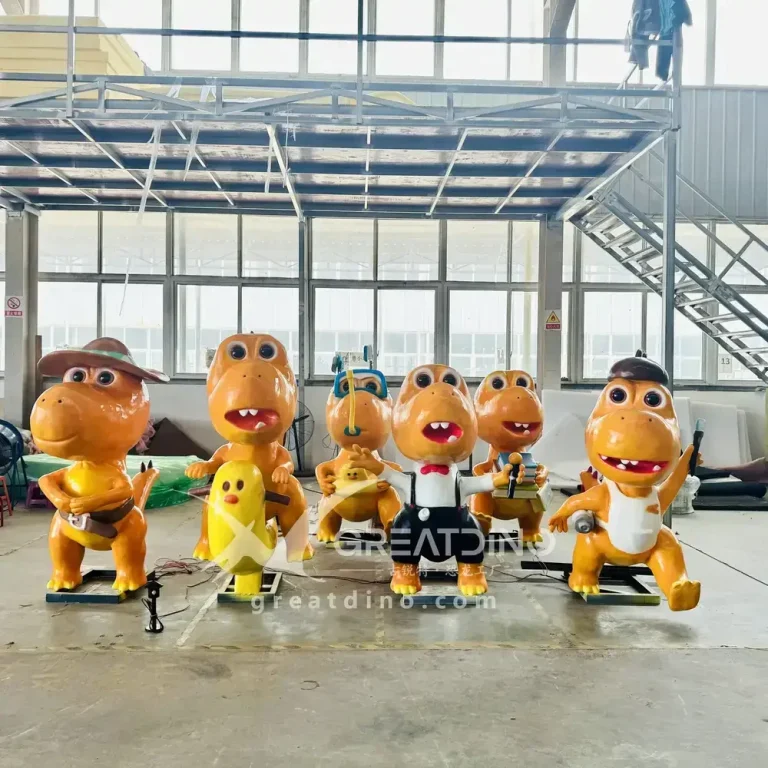 1.5M Fiberglass Cartoon Dinosaur Sculpture Set
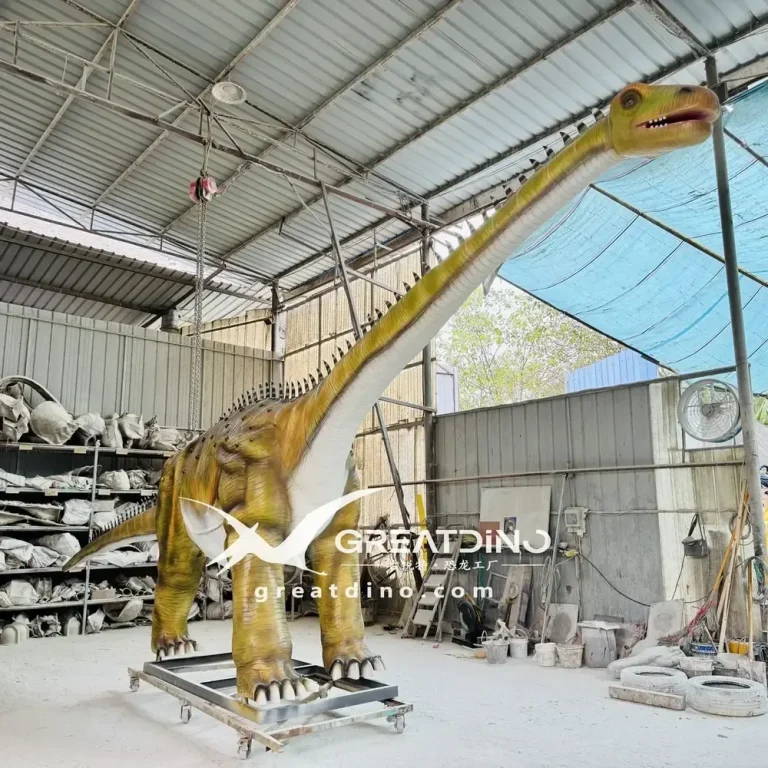 12M Life-Size Animatronic Diplodocus Model
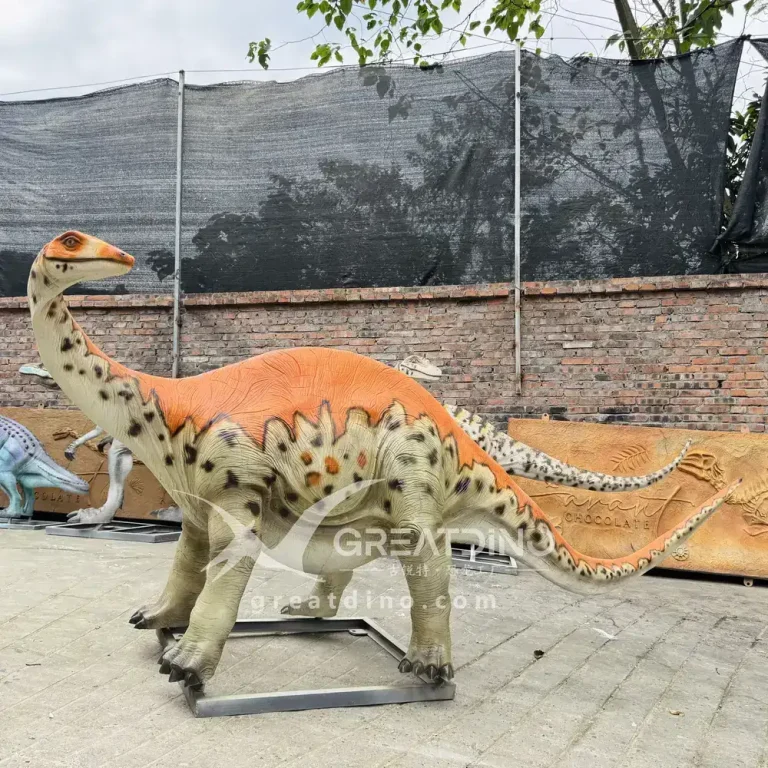 4M Fiberglass Melanorosaurus Sculpture
Related reading: buying guides for museums and theme parks and the full fiberglass statues range.
The things buyers usually want settled before they ask for a drawing.
No drive, no controller and no power at the site — the piece is a sculpted shell on an armature, anchored to the ground. It costs less, needs no maintenance visits and never breaks down, which is why trails mix a few animated hero pieces with many static ones.
Yes, with the outdoor topcoat and the drainage gap at the base. Expect to re-apply the topcoat every three to five years depending on sun and salt exposure, and to touch up the base joint after the first winter. Coating failure at thin edges is the usual first sign that a re-coat is due.
A base plate with an anchor drawing, specified for the ground condition: a concrete pad on soil, chemical anchors into existing paving, or a weighted base where nothing can be drilled. The drawing ships ahead of the piece so the groundwork is finished before delivery.
Yes, and it is how most parks buy them: a hero piece plus mid-size animals along the route and small ones at child height. A set shares a palette and a finish, and we supply a layout drawing so the spacing and sightlines work from the path.
One crate for pieces up to about 4 m, sectional above that. Lifting points are marked on the frame, not on the tail or neck, and the piece is balanced for a single crane lift. Most installations are half a day including the base touch-up.
The model ships in sections, with the head and jaw crated separately. Assembly is typically one day on site with a small crane, followed by a full movement test before handover.
Every project ships with a spare-parts list, a maintenance guide and the wiring diagram. Servo units and the jaw drive are individually replaceable on site, so a component can be swapped without returning the animal to the factory. A 2-year warranty and worldwide delivery and installation support are included.