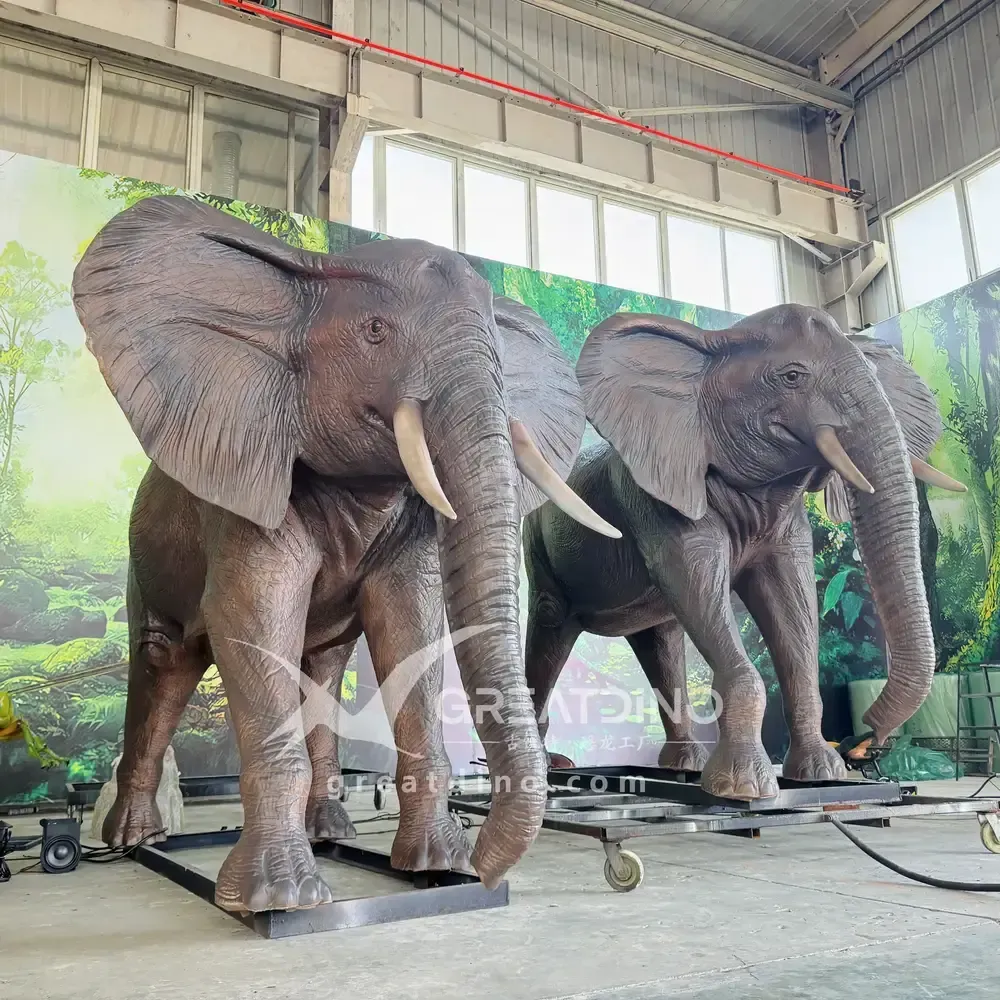
Two adult African elephants built as one composition — trunks that curl, ears that swing, and a hide sculpted wrinkle by wrinkle rather than cast from a single mould. Specified to the enclosure they will stand in, indoors or out.
Every model is made to order. The figures below describe this build as specified; size, pose, colours and effects are configured around your site before the frame is laid out.
| Product type | Large electric animatronic animal model |
|---|---|
| Overall size | Length 5 m, shoulder height approx. 3 m per animal — custom sizing from 2 m to 8 m |
| Power | 110 V / 220 V, specified per site; CE / UL certified components available |
| Power draw | Scales with movement count; two-animal sets can run from one controller |
| Control | Industrial controller · remote · infrared sensor trigger · timed loop |
| Materials | Welded steel frame, anti-rust treated · high-density foam · 3–4 layer silicone hide · fibre mesh reinforcement |
| Movements | Trunk curl and swing · ear flap · head turn and nod · tail sway · body rock · optional water spray from trunk |
| Effects | Optional low-frequency call · LED eyes · mist · sensor-triggered greeting sequence |
| Weather rating | Outdoor rated, with sun and lightning protection for year-round operation |
| Lead time | 30–45 days after drawing approval |
| Warranty | 2 years, with worldwide delivery and on-site installation support |
Visitors do not walk up to an elephant and inspect the feet. They watch the ears and the trunk, because those are the two parts that move on a living animal even when it is standing still.
We build the ear as a separate panelled assembly with its own drive, so it swings on a hinge rather than flexing as a soft sheet. That is what produces the slow fanning motion an elephant uses to cool down, and it reads correctly from twenty metres. The trunk is a segmented tube on a multi-axis drive: it can lift, curl inward, swing out and hold a position. A trunk that only swings side to side looks like a rope; a trunk that curls and pauses looks like an animal deciding what to do next.
Both movements are deliberately slow. Elephants are heavy, and a fast-moving trunk destroys the illusion instantly, whatever the skin looks like.
The surface of an elephant is the hardest part to fake, because everyone has seen one on television and knows what the skin does around the knees, the shoulder and the base of the trunk.
Our hide is built up in layers over high-density foam: a base silicone coat, then sculpted wrinkle lines cut and pulled by hand where the animal folds, then a pigment wash into the creases and a dry-brush over the raised areas. The result is depth rather than a printed texture. On a pair, the two animals are painted with slightly different tone and dust levels, because two identical elephants standing together look like a product, not a herd.
Colour is matched to African elephant — warm grey with a dustier, lighter underside — and can be adjusted to a client reference for a specific exhibit.
Most buyers want a pair, and the relationship between the two matters more than either animal alone.
The default composition is one adult facing the visitor with the head slightly raised, and a second standing at three-quarters behind it with the trunk down, so the group reads as animals moving together rather than two statues parked side by side. Spacing, head angles and the direction of the second animal are set at the drawing stage — after the frames are welded, those relationships are fixed.
The pair can share a single controller and a single power point, which simplifies site wiring and keeps the movement cycles synchronised with an offset so they never move in unison. Where a site only has room for one, the same sculpt is built as a single animal.
An elephant intended to stand behind a barrier for ten years is specified differently from one that travels with a temporary exhibit.
For a permanent outdoor enclosure we specify the outdoor package: UV-stable pigment in the hide, anti-rust treatment on the frame, sealed electrical enclosures and lightning protection, plus a foundation drawing so your contractor pours a base that matches the model’s load points. For an indoor gallery or a traveling show, the frame is built lighter and the model is split at the shoulder and hip for crating, with a reassembly sequence supplied.
In both cases we agree the pose, the viewing side, the barrier distance and the power location before steel is cut. Send photographs and dimensions of the space and we will recommend the stance and spacing that suits it.
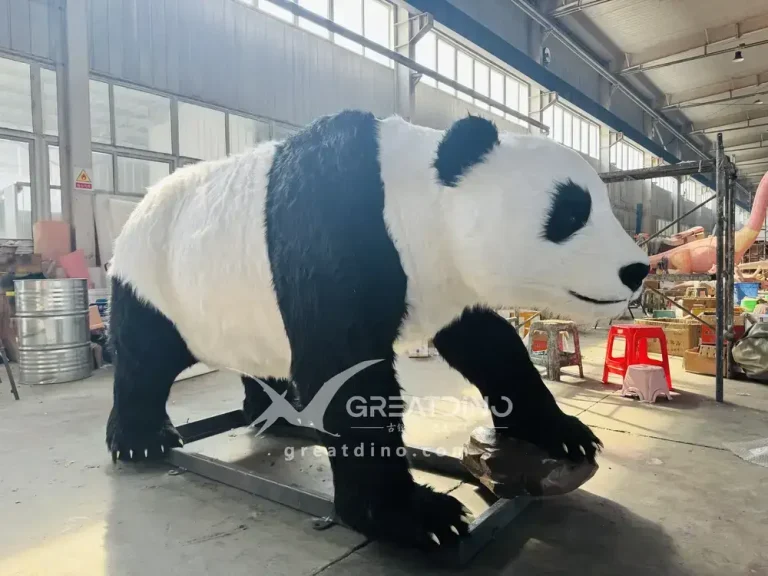 2.5M Lifelike Giant Panda Animatronic Model
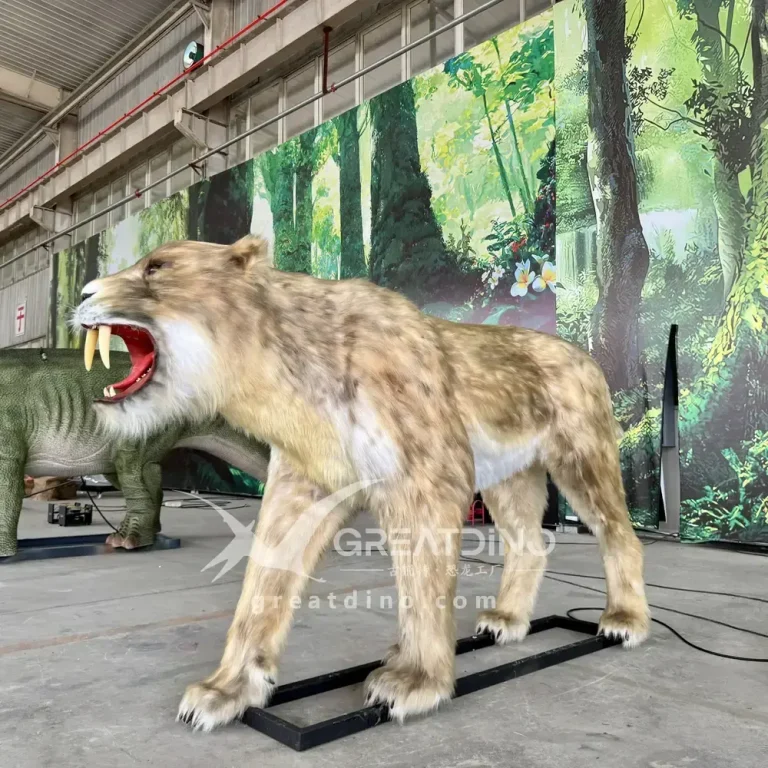 2.5M Animatronic Smilodon Ice Age Predator Model
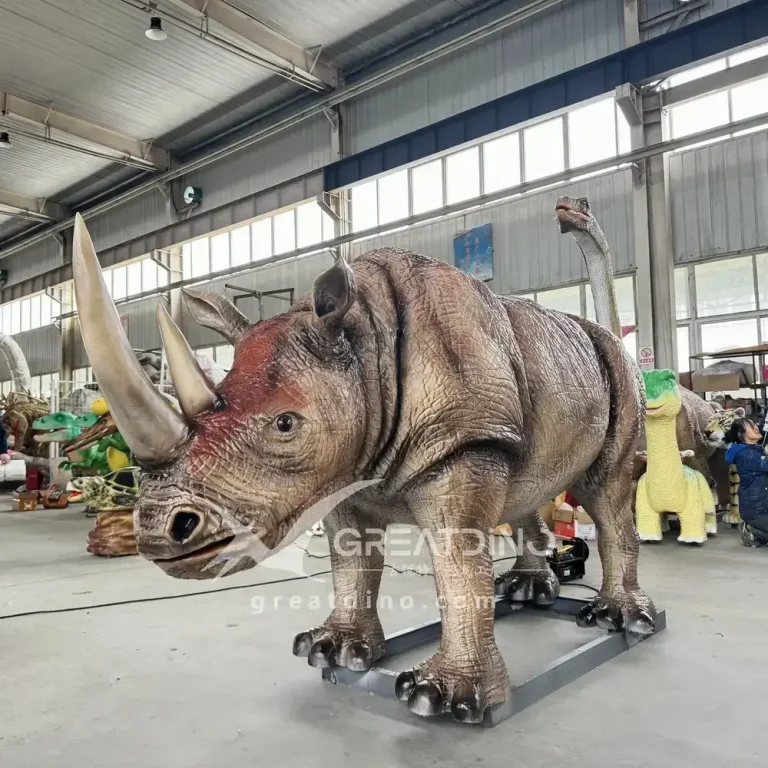 3M Giant Animatronic Rhinoceros Model
Related reading: buying guides for museums and theme parks and the full animatronic animals range.
The things buyers usually want settled before they ask for a drawing.
Yes. The same sculpt is built as a single animal with its own controller. The pair is the more common order because two animals read as a group from a distance, but a single adult works well at an entrance or beside an enclosure sign.
Trunk curl, lift and swing; ear flap; head turn and nod; tail sway and a slow body rock. Optional additions include a low-frequency call, LED eyes, mist from the trunk and a sensor that starts the greeting sequence when a visitor approaches.
Yes, with the outdoor specification: UV-stable pigment, weatherproof silicone, anti-rust treated frame and sealed electrical enclosures with lightning protection. The model is built to run across a wide temperature range without re-skinning.
A two-animal composition typically occupies a footprint of about 11 m by 5 m including clearance for the ear swing and trunk movement. We issue a plan with load points and clearance zones so the base and barrier can be set out before delivery.
110 V or 220 V depending on your site, with CE / UL certified components available. The pair can run from one controller and one power point. Control is an industrial controller with remote; sensor trigger and timed loop are optional.
The animals ship in sections with the head and trunk crated separately. Assembly is typically one to two days on site with a small crane, followed by a full movement test before handover. A wiring diagram, maintenance guide and spare-parts list ship with the order.
The model ships in sections, with the head and jaw crated separately. Assembly is typically one day on site with a small crane, followed by a full movement test before handover.
Every project ships with a spare-parts list, a maintenance guide and the wiring diagram. Servo units and the jaw drive are individually replaceable on site, so a component can be swapped without returning the animal to the factory. A 2-year warranty and worldwide delivery and installation support are included.