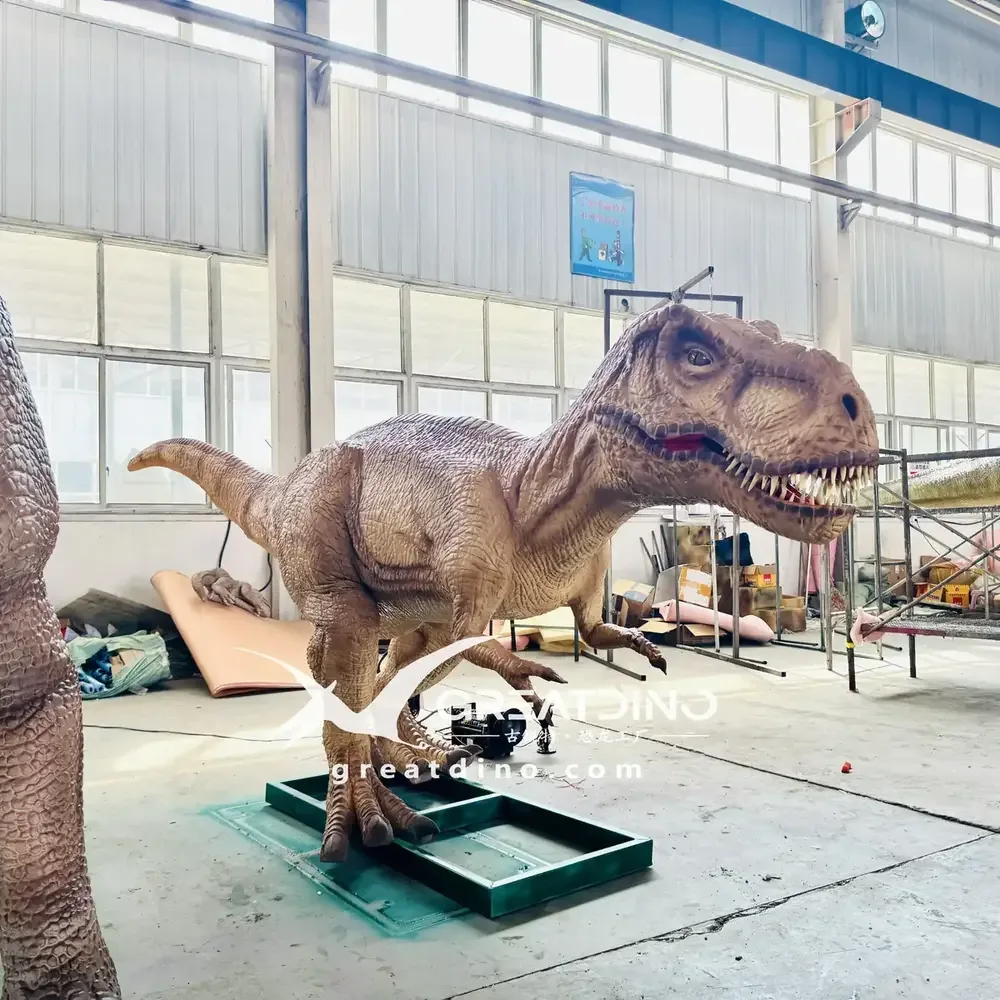
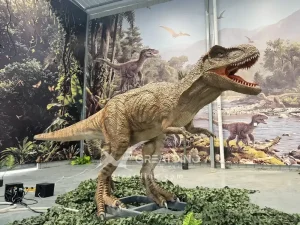
A five-metre T-Rex built to order — a deep skull with a working jaw, a weighted movement cycle and a hand-painted silicone skin over a welded steel frame. Sized and posed for the site it will stand in, not pulled from a catalogue.
Every model is made to order. The figures below describe this build as specified; size, pose, colours and effects are configured around your site before the frame is laid out.
| Product type | Large electric animatronic dinosaur model |
|---|---|
| Overall size | Length 5 m, hip height approx. 2.1 m — custom sizing from 2 m to 15 m |
| Power | 110 V / 220 V, specified per site; CE / UL certified components available |
| Power draw | Scales with movement count; wiring diagram supplied with every shipment |
| Control | Industrial controller · remote · infrared sensor trigger · coin-op optional |
| Materials | Welded steel frame, anti-rust treated · high-density foam · 3–4 layer silicone skin · fibre mesh reinforcement |
| Movements | Head turn and nod · jaw open and close · neck raise and lower · tail sway · body rock · optional eye blink and breathing |
| Effects | Optional roaring sound · LED eyes · mist or water spray · sensor interaction |
| Weather rating | Outdoor rated, with sun and lightning protection for year-round operation |
| Lead time | 30–45 days after drawing approval |
| Warranty | 2 years, with worldwide delivery and on-site installation support |
On a T-Rex, visitors read the head first — and it is the part most often got wrong.
The defining feature is the jaw. A T-Rex had a deep, heavy skull with a hinged lower jaw built for crushing, not a narrow snout built for nipping. We sculpt the jaw line to match that deep profile and set the hinge so the bite closes with weight behind it. Get that proportion wrong and the animal reads as a generic giant lizard, however good the skin is.
The eye sits high and slightly back on the skull, with a brow ridge over it. That placement is what gives the face its forward, predatory read. Our sculpt follows the anatomy rather than placing the eyes where a motor is easiest to fit — a small decision that changes the whole expression of the model.
An animatronic reads as alive when its movement is deliberate. Constant thrashing looks like machinery; a slow, weighted sequence reads as an animal.
The default cycle on this model starts with the head turning toward the visitor, followed by a nod, a jaw open and close, a tail sway and a low body rock, with pauses between each move so the animal appears to react rather than run a loop. We tune the timing to the setting — a slower cycle suits a museum hall, a more active one suits a park entrance where visitors pass quickly.
Movement count is configurable, and it is the single biggest driver of both power draw and cost. A standard head–jaw–tail set covers most installations; eye blink, breathing and sound are added only where they earn their place in the story you are telling.
The material specification follows where the model will live and how many people will walk past it.
The internal frame is welded steel, anti-rust treated, with servo drives matched to the movement set. Over that goes high-density foam for body volume and a three-to-four layer silicone skin with fibre mesh reinforcement. The skin is hand-textured and hand-painted, which is what produces the muscle definition and colour variation in the photographs rather than a repeated mould pattern.
For outdoor sites the skin and electrical enclosures are specified for sun, rain and lightning protection and the model runs across a wide temperature range. An indoor gallery unit does not need that specification and we build it lighter. Frame, skin and paint are all done in-house — this is a factory-direct build, not an assembly of bought-in parts.
The same five-metre sculpt can stand at the end of a park trail or inside a museum hall, but it should be specified differently for each.
In a museum or discovery centre the model is examined up close, so we prioritise skin detail, accurate proportions and a quieter cycle, with clearance for interpretation panels. In a theme park or plaza the reading distance is greater, so silhouette and scale matter more and the build is specified for weather and visitor flow from the start.
Before steel is cut we agree on the pose, the viewing distance, the power point and the foundation, and a plan for each ships with the model so your contractor builds to the same drawing we built to.
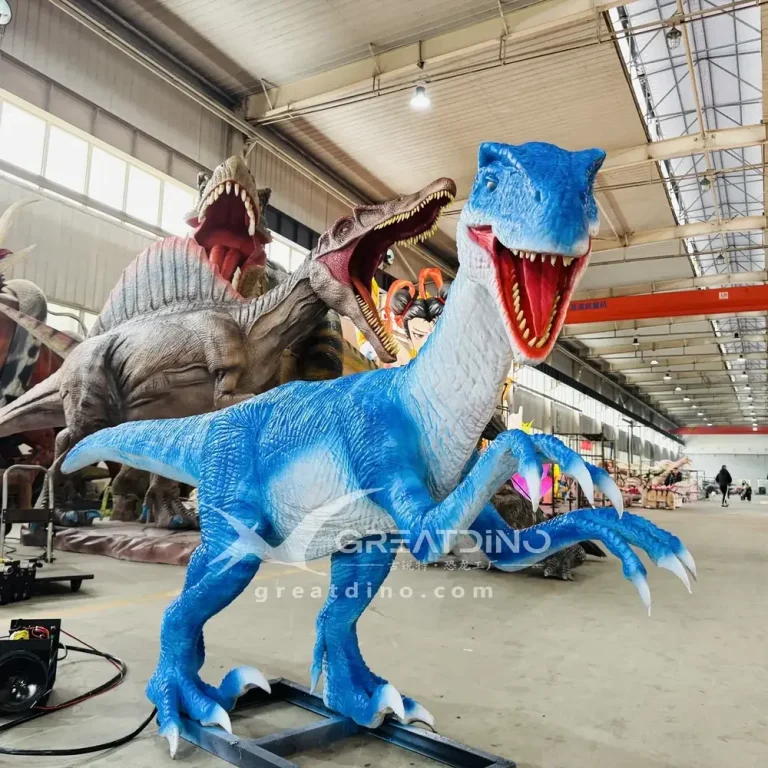 4M Animatronic Velociraptor Model
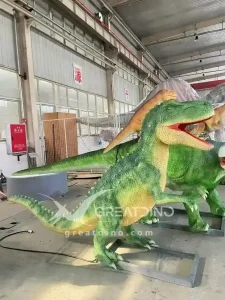
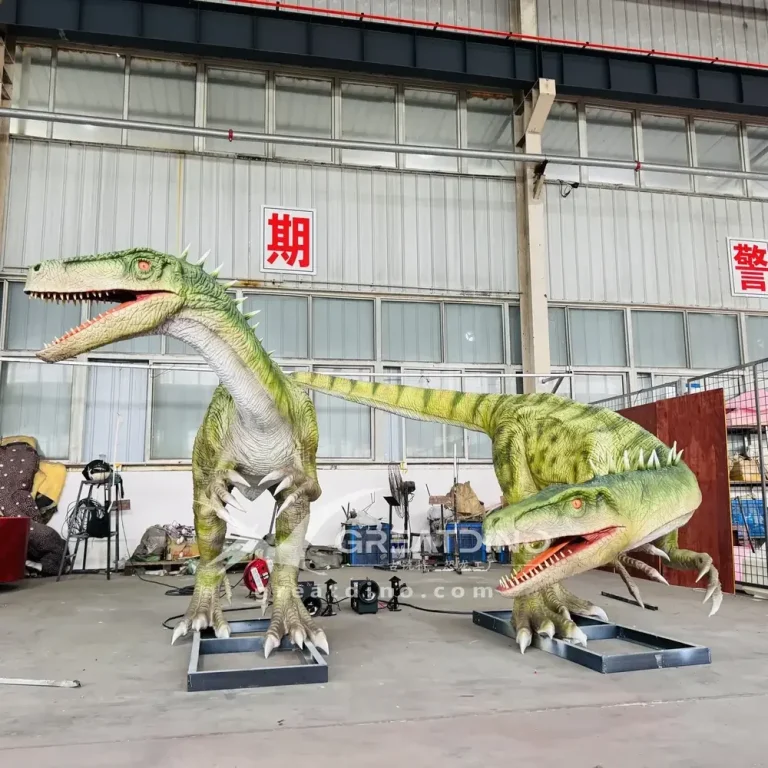 5M Animatronic Irritator Dinosaur Fighting Group
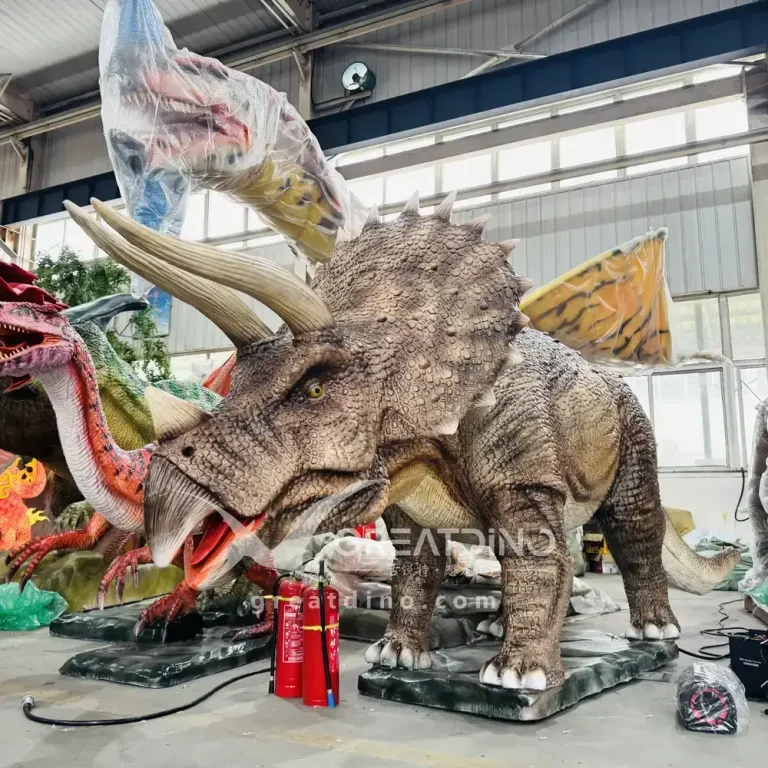 5M Animatronic Triceratops Dinosaur Model
Related reading: buying guides for museums and theme parks and the full animatronic dinosaurs range.
The things buyers usually want settled before they ask for a drawing.
Five metres nose-to-tail is the most specified size for a permanent outdoor installation — large enough to read as a T-Rex from a distance, small enough to sit on a standard trail without dominating it. For a wide-open park we regularly scale the same sculpt to 8 m; inside a gallery, 3–4 m usually reads better. Size is settled at the drawing stage, not after the frame is welded.
No — not without rebuilding the internal frame. Head angle, jaw position and tail curve are all set against the steel skeleton, so the pose locks when the drawing is approved. It is the one decision we ask buyers to settle early.
Yes. The skin is weatherproof silicone over a welded, anti-rust treated frame, with sun and lightning protection specified for outdoor sites. It is the same material family used on installations across 80+ countries, and an indoor unit can use a lighter finish.
Standard programming covers head turn and nod, jaw open and close, neck raise and lower, tail sway and body rock. Eye blink, breathing, roaring sound, LED eyes, mist spray and an infrared sensor that starts the sequence on approach are all optional.
110 V or 220 V depending on your site, with CE / UL certified components available. Power draw scales with the number of movements. Control is an industrial controller with a standard remote; sensor trigger and coin-operated start are optional.
The model ships in sections with the head and jaw crated separately. Assembly is typically one day on site with a small crane, followed by a full movement test before handover. A wiring diagram, maintenance guide and spare-parts list ship with every unit.
The model ships in sections, with the head and jaw crated separately. Assembly is typically one day on site with a small crane, followed by a full movement test before handover.
Every project ships with a spare-parts list, a maintenance guide and the wiring diagram. Servo units and the jaw drive are individually replaceable on site, so a component can be swapped without returning the animal to the factory. A 2-year warranty and worldwide delivery and installation support are included.