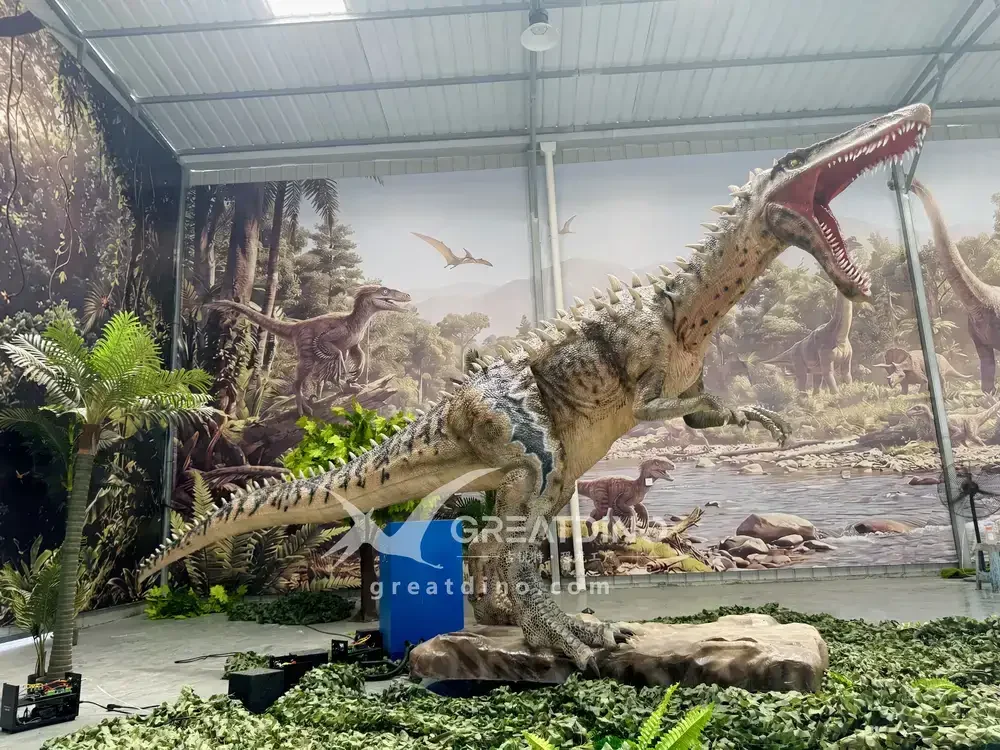
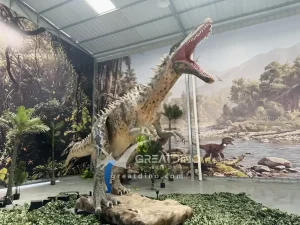
6 m Baryonyx built to order — servo drive at every axis, programmed to the scene and handed over with the project file.
Every model is made to order. The figures below describe this build as specified; size, pose, colours and effects are configured around your site before the frame is laid out.
| Product type | Custom Baryonyx, servo-driven, made to order |
|---|---|
| Overall size | 6 m as specified — other lengths built on request |
| Drive | Servo motor at each joint, programmable range, speed and easing |
| Frame | Welded steel armature, anti-rust primed, load-braced |
| Surface | Sculpted foam with silicone or fabric skin, hand-finished |
| Movements | Configured per drawing — jaw, neck, limbs, tail, body, effects |
| Controller | Multi-axis controller with stored sequences and input mapping |
| Inputs | Motion sensor · push button · coin unit · show cue · staff remote |
| Audio | Synchronised to sequence; custom voice or effect tracks |
| Power | 110 V / 220 V single phase; low-voltage option for contact exhibits |
| Programming | Project file handed over with the model; on-site tuning included |
| Packing | Crated with controller, project file, wiring diagram and spares list |
| Lead time | 30–50 days after drawing approval, plus freight |
| Warranty | 2 years on drives, controller and structure |
Two drive families sit under these models. A standard animatronic uses geared motors and cams: reliable, inexpensive, and limited to the movements the mechanism was cut for. A servo build puts a programmable motor at each joint, so range, speed and acceleration are set in software and can be re-tuned after installation without changing hardware.
The difference shows in the motion. The spine ridge and the long crocodilian snout make the animal recognisable, and both are servo-driven so the neck can reach down to the water as well as across. Servo joints hold position under load and accelerate through a move, which is what makes a head turn read as intent rather than as a mechanism reaching its stop.
A servo build is written as a timeline, not a loop. Each joint gets keyframes with an easing curve, so a jaw can open fast and close slowly, and the whole animal can run different sequences depending on what triggered it. That is how one model behaves calmly for most of the day and aggressively when a visitor steps onto the mark.
Sequences are stored on the controller and selected by input: motion sensor, button, coin, show cue or staff remote. We hand over the project file with the model, so a venue can adjust timing or add a sequence later without coming back to the factory for a re-flash.
What separates an exhibit from a display is the loop: sense, react, reset. Sensors at the approach line start the sequence, the model responds within a beat, and it returns to idle after a set time with no input. Getting the delay right matters more than the movement count — too fast and it feels mechanical, too slow and visitors walk past before it fires.
For museum and education pieces the interaction is often simpler and better: a button at child height, four heads that turn and speak, a light that responds to a hand. These builds run on low voltage, are quiet, and are designed so a queue of children can cycle through without staff supervision.
Custom work starts with the scene, not a catalogue number: a sketch, a reference image, a written description or a physical mock-up. We return a proportion drawing and a movement list, then a price against that drawing, and only then does steel get cut. Changes after the drawing stage cost more because the armature is already laid out.
A 6 m build ships with the controller, the project file, the wiring diagram and a spare-parts list, and the movement program is loaded and tested before crating. Installation and programming on site is normally one to two days, and a two-year warranty covers drives, controller and structure.
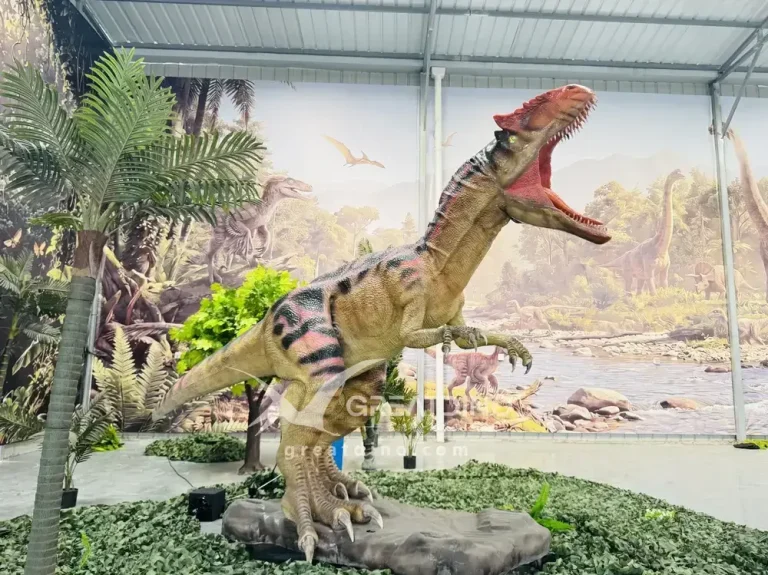 5M Servo Animatronic Allosaurus Model
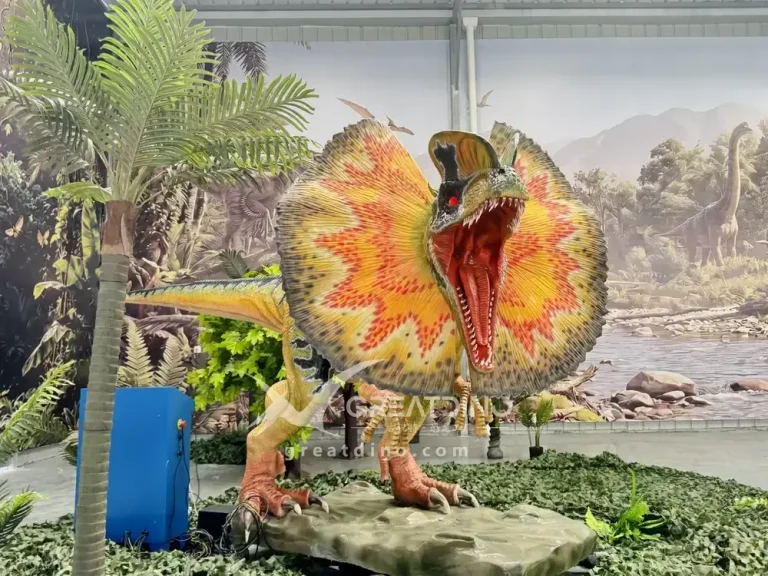 5M Servo Animatronic Dilophosaurus
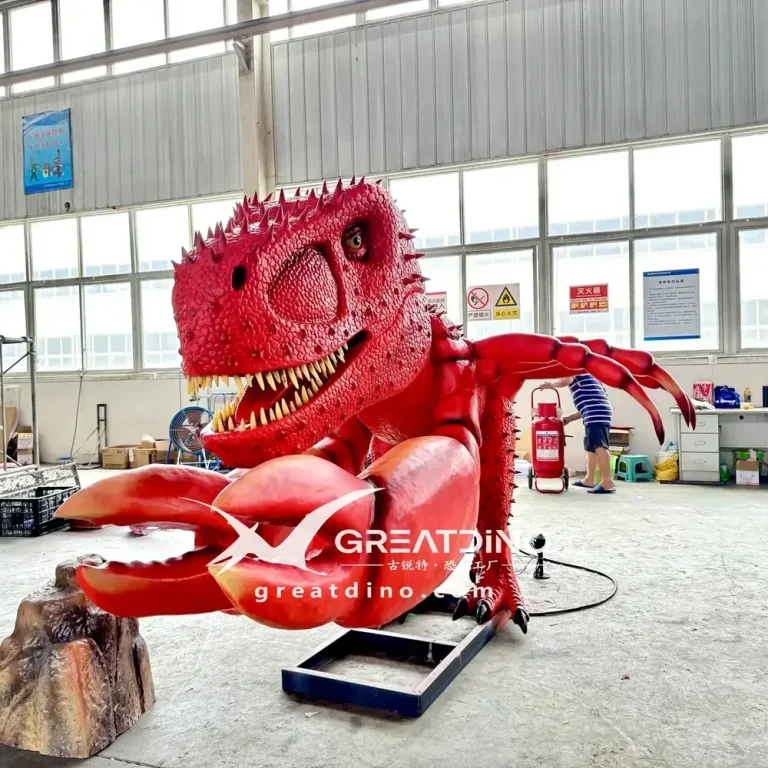 2.5M Animatronic T-Rex Crab Hybrid Statue
Related reading: buying guides for museums and theme parks and the full high-tech custom models range.
The things buyers usually want settled before they ask for a drawing.
A standard build uses geared motors and cams, so the movement range is fixed by the mechanism. A servo build puts a programmable motor at every joint, so range, speed and acceleration are set in software and can be re-tuned later without new hardware. Servo motion is smoother and quieter, and the cost sits roughly 20–35% above the same model in a standard build.
Yes. The controller stores multiple sequences and the project file is handed over with the model, so a venue can adjust timing, add a sequence or remap an input without a factory visit. We include a short programming session at commissioning.
Frame, proportion, pose, movement set, surface, colour, sound and interaction are all open. What constrains a build is physics and budget, not a catalogue: a 20 m animal cannot move like a 4 m one, and every added axis adds cost and a service item. We return a drawing and a movement list before quoting.
Each axis is individually replaceable on site. The controller reports which axis has faulted, the spare is a stocked part, and the replacement is a mechanical swap plus a re-zero of that joint. The spare-parts list shipped with the model names the units used.
Three decision points: approve the proportion drawing, approve the painted skin sample, and sign off the movement test video before crating. Beyond that the build runs in our workshop and we send progress photographs at each stage.
The model ships in sections, with the head and jaw crated separately. Assembly is typically one day on site with a small crane, followed by a full movement test before handover.
Every project ships with a spare-parts list, a maintenance guide and the wiring diagram. Servo units and the jaw drive are individually replaceable on site, so a component can be swapped without returning the animal to the factory. A 2-year warranty and worldwide delivery and installation support are included.