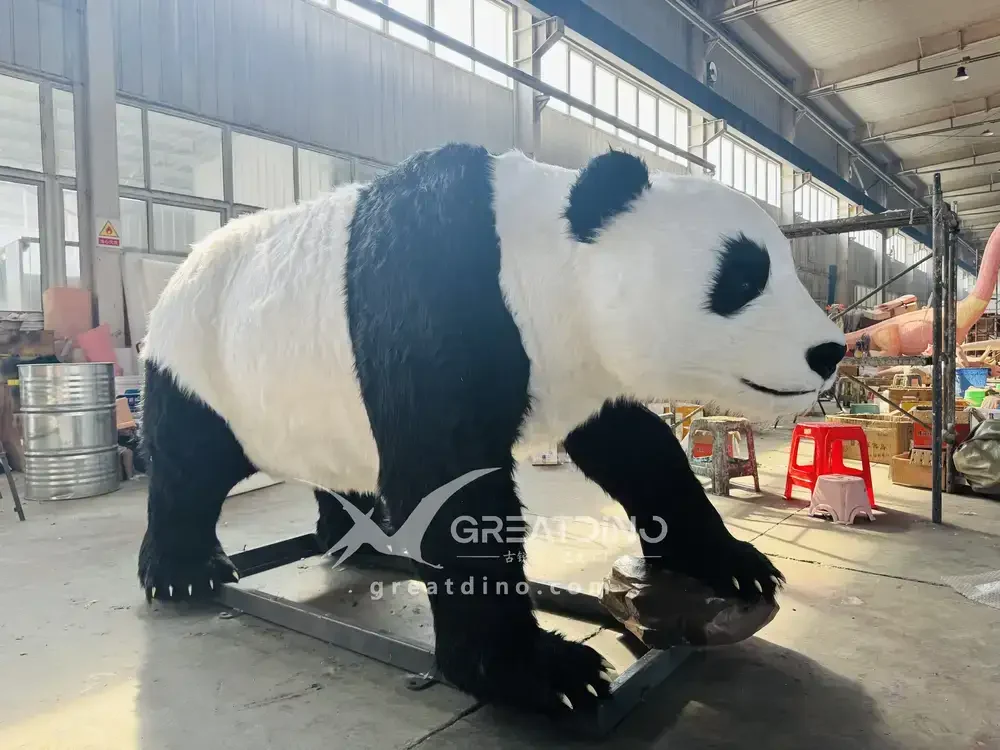
2.5 m giant panda model built to order — sculpted and hand-finished skin over a steel frame, with trigger interaction for zoos, safari parks and themed attractions.
Every model is made to order. The figures below describe this build as specified; size, pose, colours and effects are configured around your site before the frame is laid out.
| Product type | Animatronic giant panda model, made to order |
|---|---|
| Overall size | 2.5 m as specified — other lengths built on request |
| Frame | Welded steel, anti-rust primed |
| Surface | High-density foam core · sculpted and hand-finished skin · layered fur or plumage where specified |
| Movements | Head turn and nod · jaw open · neck · tail or body sway · breathing · eye blink |
| Drive | Servo motors with industrial controller |
| Control | Motion or infrared trigger · remote handset · timed loop |
| Sound | Species-appropriate call or narration, volume adjustable on site |
| Power | 110 V / 220 V single phase; CE / UL components available |
| Weather rating | Outdoor build with treated surface and sealed electronics; indoor build lighter |
| Site requirement | Level base or footing; anchor drawing supplied |
| Packing | Timber crate with controller, remote and wiring diagram |
| Lead time | 25–40 days after drawing approval, plus freight |
| Warranty | 2 years, with worldwide delivery and installation support |
Visitors forgive a stylised dinosaur and they do not forgive a bad lion. An animal model is measured against the living thing the audience already knows, so proportion, eye placement and the way the head sits on the neck have to be right before any detail is added. We sculpt from photographic reference at the requested size and check the profile against the animal’s own stance.
The surface is where most animal models lose credibility. The pose is a charge with one paw raised onto rockery, built as a stage prop with a reinforced base so the stance holds through a full run of shows. That level of surface work is done by hand, animal by animal, which is why these models are built to order rather than pulled from a stock mould.
An animal that idles like a machine stops drawing a crowd within a week. The standard cycle mixes small resting movements — head turn, ear or mane shift, jaw and breathing — with a triggered response when someone approaches, so the model has something to do when nobody is in front of it and something more when they are.
Triggering is by infrared or motion sensor at the enclosure edge, with a remote override for staff. A recorded call, a growl or a narration track can be synchronised to the movement beat, and volume is set at commissioning so the model does not become a nuisance to neighbouring exhibits.
Skin material follows the animal. Big cats and primates take a flocked or furred surface built up in layers over the foam; birds take graduated plumage in different lengths; reptiles and amphibians take a sculpted, hand-painted skin with individual scale work. All of it sits over the same welded steel frame and servo drive package.
Outdoor animals need more than a weatherproof skin. Fur holds water, so outdoor builds use a treated, quick-drying pile with drainage at the belly and a sealed electrical box; birds get a water-shedding finish on the plumage. Indoor theatrical models are built lighter because heat and weight matter more than rain.
These models work at three scales: a 2.5 m figure as a standalone photo point, a larger-than-life version as a gateway piece, and a matched group that forms a scene. The same animal is built across that range, and a set ordered together shares frame design and drive parts, which simplifies spares.
Each unit is crated with the controller, remote and wiring diagram. Site work is normally one day per model — set the base, mount the body, load the movement program and test the triggers. A two-year warranty and worldwide installation support are included, and replacement skin panels are supplied painted to match.
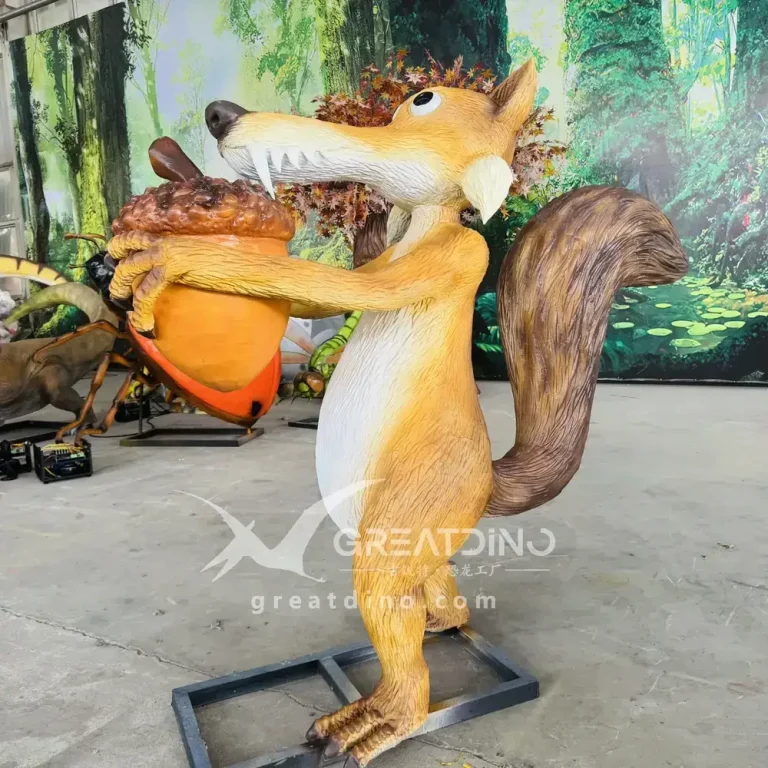 1.5M Ice Age Scrat Animatronic Squirrel Model
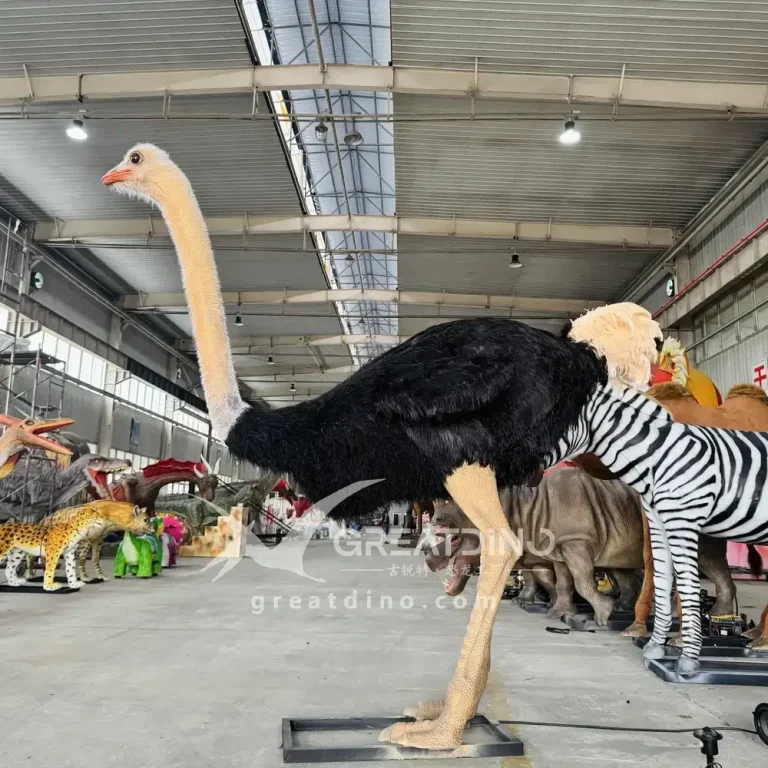 2.8M Ultra-Realistic Animatronic Ostrich Model
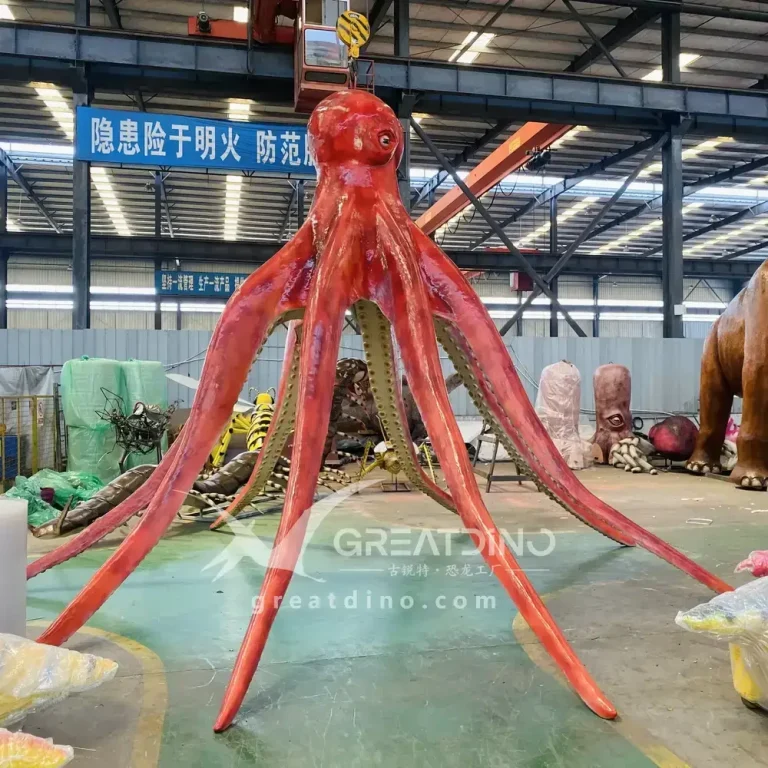 5M Realistic Animatronic Octopus Model
Related reading: buying guides for museums and theme parks and the full animatronic animals range.
The things buyers usually want settled before they ask for a drawing.
Yes. Send reference photographs and the pose you want and the sculpt is built from those rather than from a stock shape. Colour matching is done against the photographs under neutral light, and a painted sample panel can be approved before the full skin is finished.
Close enough to be photographed at arm's length. Skin is sculpted and painted by hand, with individual scale, feather or fur work depending on the species, and eyes are set in sculpted sockets rather than glued onto a flat face — that socket is what stops the model looking like a mascot.
Outdoor builds use treated, quick-drying pile with drainage at the belly, or a water-shedding plumage finish for birds. They are specified for permanent outdoor use, though in very wet climates we recommend a covered position or a seasonal cover, and replacement panels are supplied painted to match.
An infrared or motion sensor at the enclosure edge starts the interactive sequence, with a remote handset for staff override and a timed idle loop for periods with no visitors. Trigger range and the delay before the response are set at commissioning.
Yes, and it is the usual way these models are bought. A group ordered together shares frame design and drive parts, is painted as one palette, and is programmed so the animals react in sequence rather than all at once.
The model ships in sections, with the head and jaw crated separately. Assembly is typically one day on site with a small crane, followed by a full movement test before handover.
Every project ships with a spare-parts list, a maintenance guide and the wiring diagram. Servo units and the jaw drive are individually replaceable on site, so a component can be swapped without returning the animal to the factory. A 2-year warranty and worldwide delivery and installation support are included.